Cuttyhunk: Small Island, Big Impression
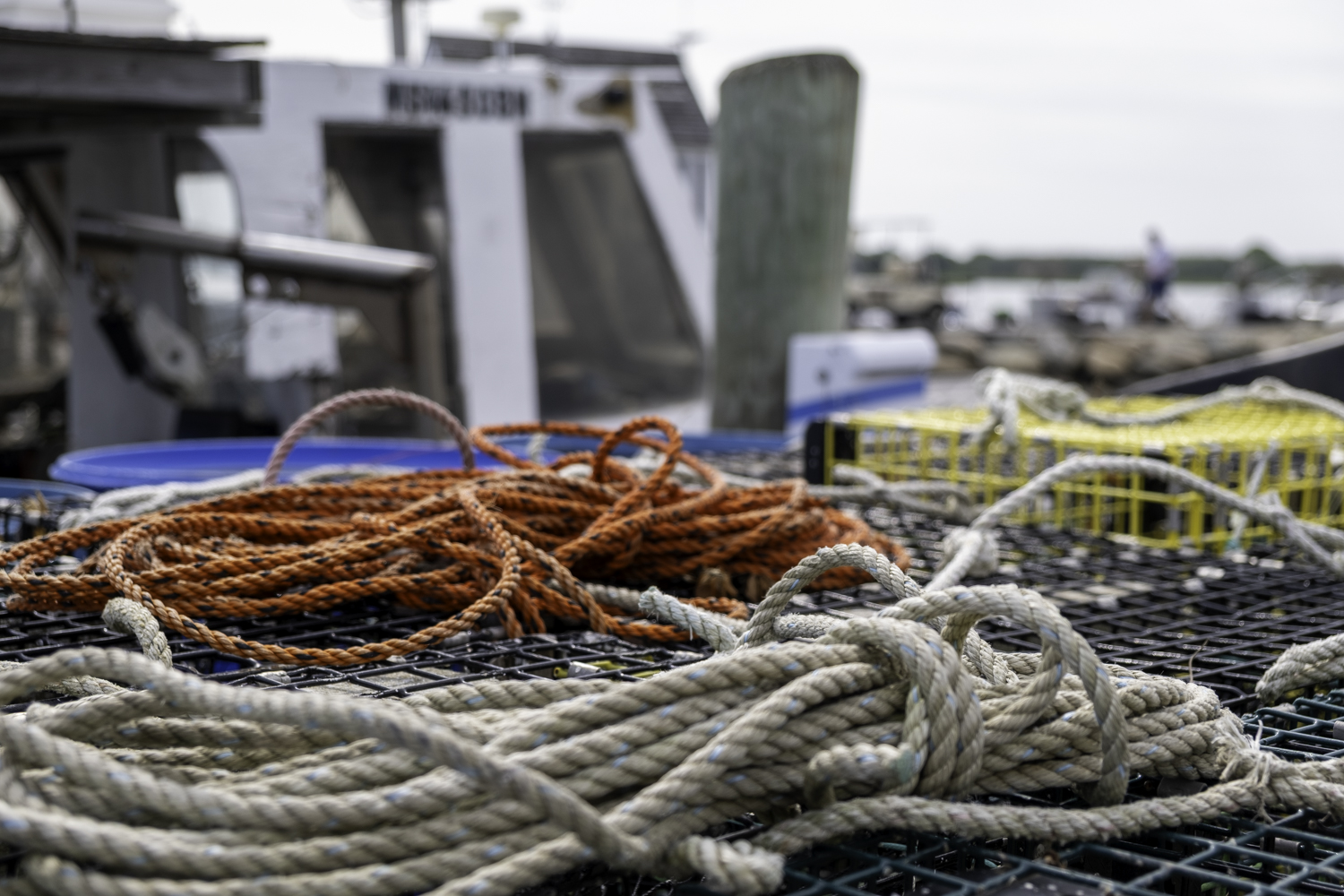
Cuttyhunk sits at the far western edge of the Elizabeth Islands, a compact crescent of land that feels, to the sailor, like both an ending and a beginning. It’s little — about a mile and a half long and three-quarters of a mile wide — and in the off season it practically hums with the calm of only a few year-round residents. Then summer arrives, and the island quickly fills with people, boats, and the kinds of small rituals that define island life: the morning run up Lookout Hill, the routine of checking the mooring lines, a slow evening walk past the lobster pounds. The year-round population is tiny (often cited in the low tens) and swells to a few hundred in the summer months.
History
Long before Europeans arrived, the Wampanoag people fished and traveled through these waters. The island’s English history begins in 1602, when Bartholomew Gosnold landed here and briefly established a fort in search of sassafras. Over the centuries, Cuttyhunk evolved from a working island of pilots, fishermen, and small families into a seasonal refuge. Fishing clubs, summer homes, and now the steady migration of visiting sailors have all left their mark. The result today is a curious blend of heritage and simplicity — an island that feels suspended in time.
Disconnecting, by Design
Until Starlink came along, a trip to Cuttyhunk meant being truly offline. Cell coverage is patchy and mobile data practically vanishes once you’re in the Pond. For years, sailors joked that “Cuttyhunk Wi-Fi” meant listening to your neighbor’s halyards tapping the mast.
That lack of connectivity is, for many, the point. With no strip of shops, no nightlife, and only a few small food shacks, you’re invited to slow down. A book in the cockpit lasts all afternoon, conversations stretch without interruption, and time takes on a softer rhythm.
One favorite pastime is hanging out in the channel to the Pond on dinghies, paddleboards, or floats. It becomes an informal social hour — part boat parade, part floating block party — as visitors drift and chat while boats parade in and out of the harbor. Like so much of Cuttyhunk life, it’s simple, unstructured, and quietly joyful.
The Island Culture: Tight, Practical, and Welcoming
There’s a friendly, decidedly practical character to Cuttyhunk life. People move by foot, bike, or electric cart; the weather and the tide dictate the day. The community is small enough that names and faces matter — a mix of long-time residents, seasonal homeowners, and visiting boaters who quickly feel part of the rhythm.
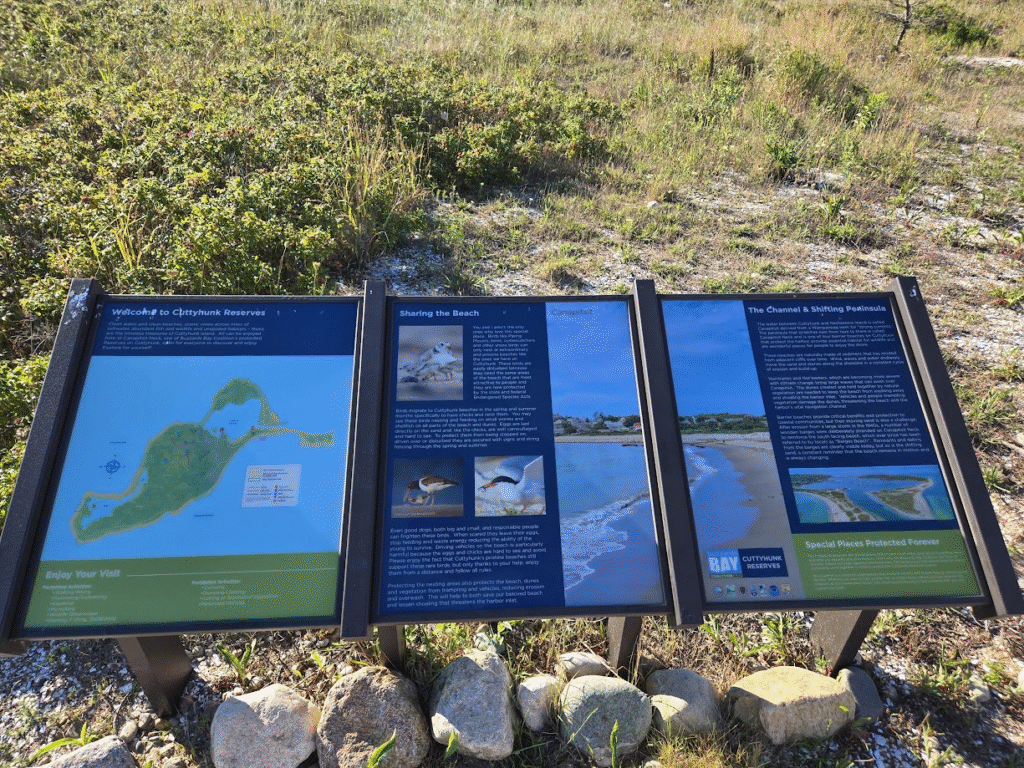
You’ll find old-school seamanship alongside a modern conservation ethic. Much of the island is protected land, bird populations are watched closely, and shellfishing remains both a livelihood and a shared resource. Amenities are modest — a small marina, a wharf, and a handful of services — but that’s precisely the charm.
The Pond vs. “Outside”: Two Very Different Berths
One of Cuttyhunk’s defining boating features is the sheltered, natural basin called the Pond. Choosing between a mooring inside or outside is a balance of comfort, space, and character.
Inside the Pond: snug and sociable
The Pond offers excellent protection and puts you right next to the village. Moorings are laid out on a tight grid, and in summer they fill up fast. You’ll be close — sometimes uncomfortably so — to your neighbors. It can be fun, but you may also find yourself listening to a generator running for hours while its owners go ashore. In high winds, picking up a mooring here can be tricky, with very little room for error. Still, if you want to be part of the social heart of the harbor, this is the place.
Outside the harbor: room to breathe
The outer harbor — between Cuttyhunk and Nashawena or just off the jetties — offers far more space and much more room if you choose to anchor. There are also town and Dockwa-listed moorings outside, with the same quirky design as those inside. The drawback is exposure: northerlies and northwesterlies can make it lumpy, though in the typical prevailing southwesterlies the water is often flat calm. If you like elbow room and don’t mind a slightly longer dinghy ride, outside offers a calmer, more open-water feel.
The Curious Case of the “Solution Looking for a Problem” Mooring
Cuttyhunk’s moorings are legendary: heavy white balls topped with a rigid vertical pipe. In theory, the pipe makes pickup easy — you thread your dock line through the ring at the top and secure. In practice, it creates problems. The height of the pipe often means mooring lines rub against anchors, rollers, or bow gear — sawing themselves raw as the boat swings.
The common workaround is to lower your anchor just a few feet so your lines rub against the hanging chain instead of the edge of your anchor. It’s inelegant, but it works. Every experienced Cuttyhunk sailor has a story about these moorings — they’re part of the island’s character, for better or worse.
Anchoring Realities
Inside the Pond anchoring is possible, but only in the northeast corner, with space for four or five boats at most. It’s not the best option on crowded weekends.
Outside there’s plenty of room to drop the hook, but you’ll battle eelgrass. Even modern scoop or plow anchors can skate over it instead of setting. Patience, multiple resets, and hunting for sandy patches are part of the game. Once set, the holding is solid, and the feeling of openness compared to the Pond is wonderful.
Etiquette and Wake Management
If Cuttyhunk has one persistent frustration, it’s wake etiquette. Ferries, fishing boats, and fellow cruisers sometimes barrel through the outer anchorage at speed, throwing up wakes that roll dinghies, scatter paddleboarders, and make climbing aboard downright hazardous. On weekends, it can be infuriating.
The worst offenders are often the powerboats racing each other for the Pond entrance, determined to secure a mooring. In that single-minded dash, any thought of the boats anchored outside disappears in their wake. Keep everything stowed during the busy daytime hours. It gets a little better if you move farther away from the pond entrance.
Practical Anchoring & Mooring Tips
- Mooring – Have your Lines Ready! You don’t have much time or room for error picking up the moorings inside (especially in high winds). Have everything ready to go. If it’s your first time, consider practicing on a mooring outside where there is a lot more room.
- Anchoring Inside the Pond, scope is limited and swing room is tight — set carefully and stay alert.
- Anchoring Outside, look for sandy patches in the eelgrass before committing.
- Check forecasts: the outer harbor is lovely in southwesterlies, but exposed in a blow from the north.
Getting There: Distances and Winds
Cuttyhunk is a convenient sail from many New England ports:
- Newport, RI – ~22 nm
- New Bedford, MA – ~12 nm
- Vineyard Haven, MA – ~15 nm
- Point Judith, RI – ~30 nm
- Block Island, RI – ~35 nm
In summer, the prevailing southwest winds shape nearly every approach. From Narragansett Bay, you’ll often beat your way out into the bay and enjoy a nice reach to Cuttyhunk. Coming home in the SW is a little more uphill. Buzzards bay can get pretty bouncy even in moderate winds.
A Place for Photos and Hikes
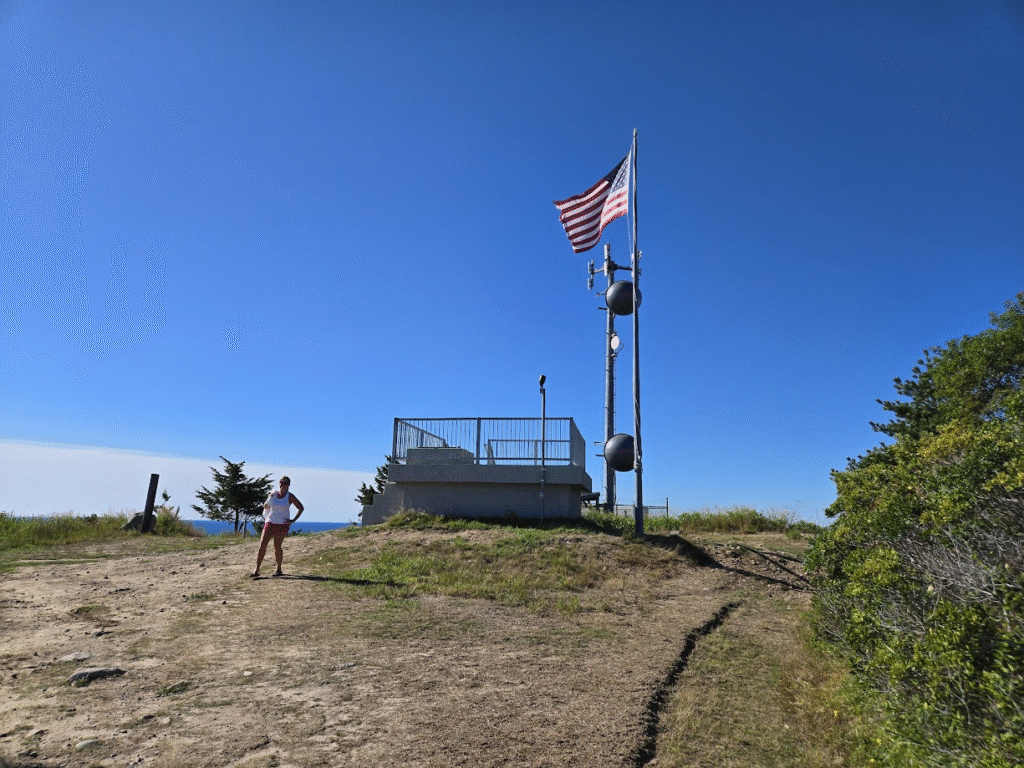
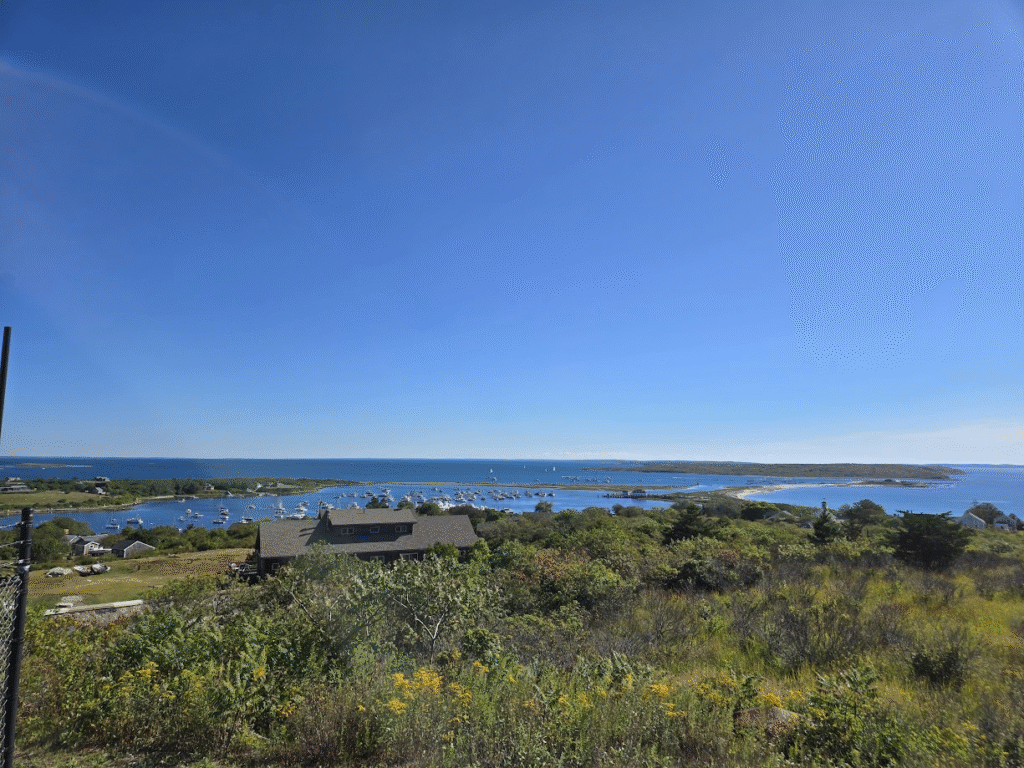
Cuttyhunk is a gem for photographers and walkers. The rocky headlands, sandy spits, and dramatic Lookout Hill provide classic New England frames. Sunrise and sunset light up the ledges with rich colors, while the small village streets and working waterfront offer stories waiting to be captured.
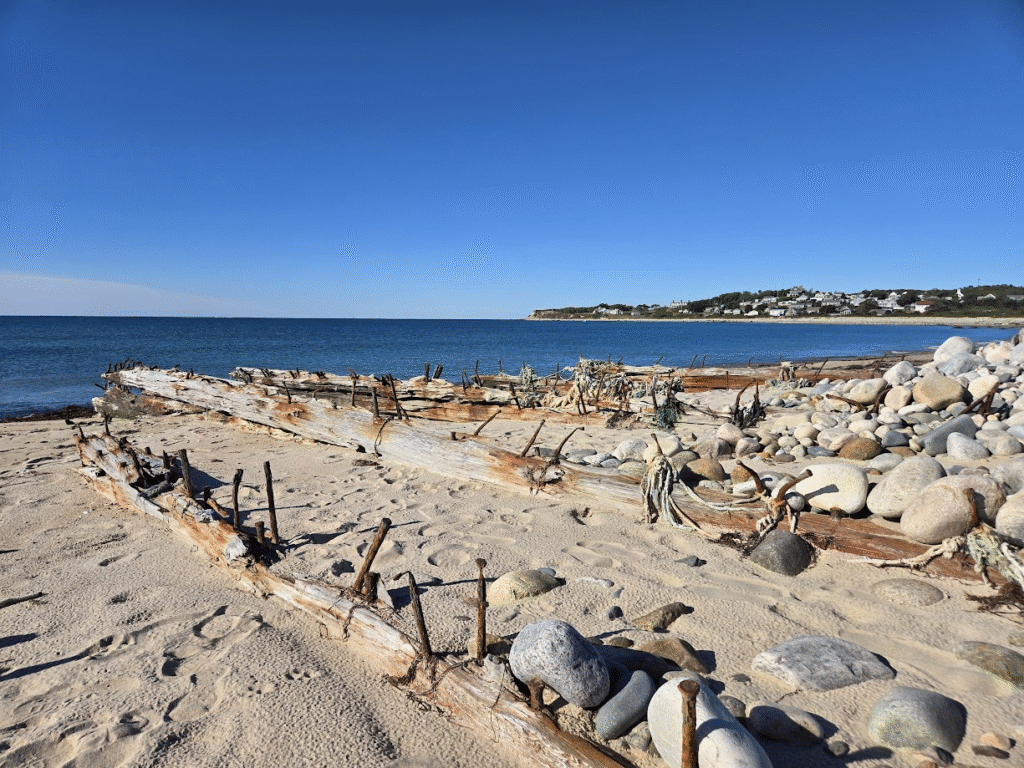
Cuttyhunk Leaves an Impression
There’s a paradox to Cuttyhunk: it’s both tiny and whole. You can circle the island in an afternoon and still feel like you haven’t exhausted it. The Pond and the outside anchorages offer two very different rhythms of island time — close, sheltered, and sociable, versus open, airy, and contemplative.
Bring your best seamanship, your camera, and a willingness to be slowed down. Cuttyhunk rewards patience: a good night’s sleep on a mooring, a quiet morning walk, and the friendly nod from someone who knows the island’s tides as well as their mailbox.
Leave a Reply